Article
Why RAM got expensive — and what AI data centres have to do with it
2 November 2026 · 4 min read · AI · Hardware · PCs
SK hynix told investors it has already sold the next three years of memory. The cheapest 32GB of decent DDR5 in US shops is about $450, or about R7,500. Your next PC does not have a reservation.
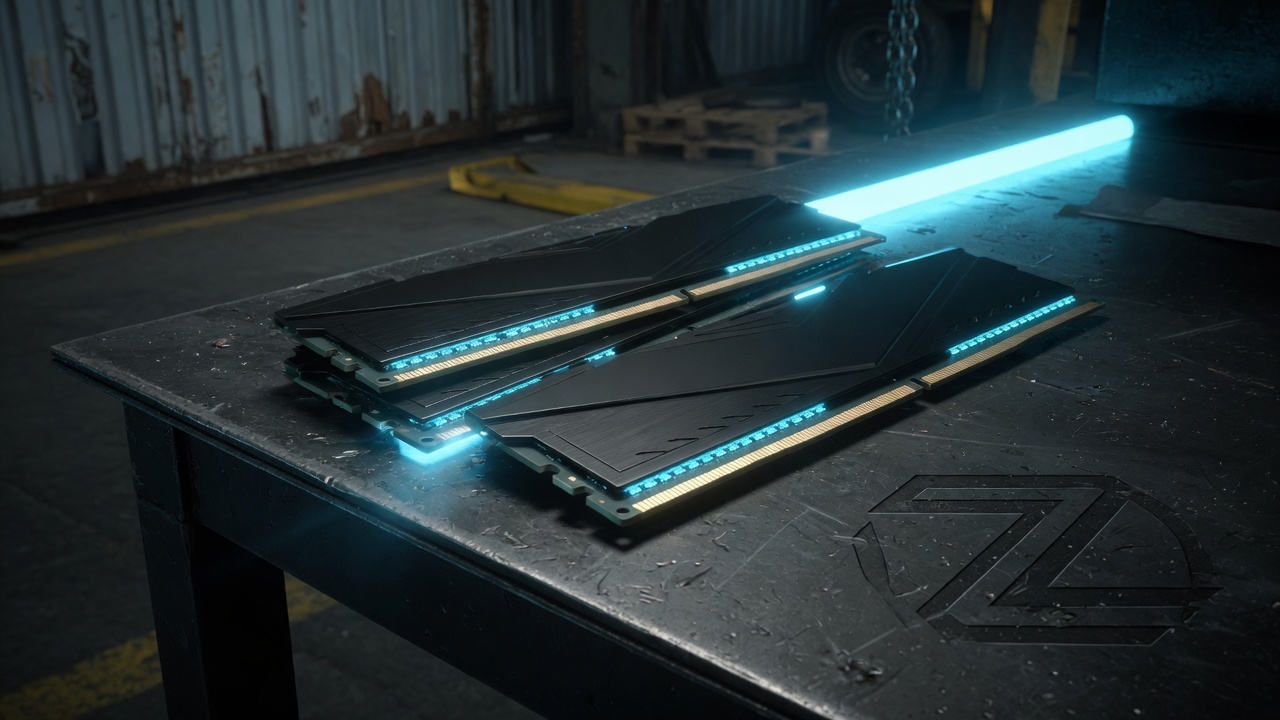
Last week a big memory company said something that should have been on the news.
SK hynix told its investors it has already sold the next three years of memory. That means chips for phones, chips for PCs, and the special stacked chips that sit on AI computers. Through 2029, they say, that stock is spoken for. They also say demand stays higher than supply until 2030.
Fourteen large customers already have long contracts on more than half of what hynix can make in 2027 and 2028. Those customers are the big cloud names. They want more than double what the factory can ship. Micron, another of the three giant memory makers, says the squeeze lasts into 2028.
RAM is the fast memory in a computer. It holds the work while the machine is on. When people say RAM got expensive, this is what they mean.
The cheapest 32GB kit of decent DDR5 in US shops is about $450, which is about R7,500. Tom's Hardware saw $449.97 in mid-October. MemoryIndex had the same kind of kit around $451 (about R7,500) on 2 November, a 64GB kit around $1,117 (about R18,600), and the small chip under those sticks at $61 (about R1,000). That small chip is up about 480% in a year.
Those are US shelf prices. The rand figures use about R16.65 to the dollar on 2 November 2026. A shop in South Africa still adds shipping and tax. Last year RAM was the cheap line on a quote. This year people close the tab.
Three factories, and a new kind of chip
Almost every memory chip on earth still comes from three companies: Samsung, SK hynix, and Micron. Laptops, phones, office PCs, and the giant halls that train AI models all drink from the same three taps. When those three point a factory at a new product, every shop on earth feels it.
The new product is called High Bandwidth Memory, or HBM. An AI chip does not use a normal RAM stick the way a home PC does. It wants a stack of memory sitting right next to it, so the model can grab data without waiting. People who measure the silicon say each bit of HBM uses about three times the factory space of ordinary DDR5. Point a line at HBM, and a lot of desktop RAM never gets made.
The big cloud companies booked those chips first. That is why a gamer waiting for a Christmas kit is standing behind a data centre.
Look at the other price list. One 32GB server stick — the kind those halls buy by the crate — was about $1,300 in early November. That is about R21,600. A laptop stick of the same size was about $990, or about R16,500. Older DDR4 memory jumped too. The factories have a better place to put that silicon.
A new factory will not save this year
A memory plant takes years to build, and billions. SK hynix is filling a plant called M15X and talking about more lines. Those chips are not on a ship yet. Until they are, phones and PCs get what is left. What is left already has a name on it.
hynix said PC and phone sales will fall because the memory costs too much, and AI demand will more than cover that for them. Tom's Hardware saw PC shipments down around 20% in a recent quarter. People look at the RAM line, keep the old machine, and wait. Waiting does not free a chip. That chip was promised in 2025 to a hall that trains models.
The next version, HBM4, is already taking over from HBM3E. After chatbots, the companies talk about cars and robots. No one on those calls has named a day when a 32GB kit is ordinary again.
So $450, about R7,500, is the price of a world that signed away its spare RAM years ahead of time.
Numbers from MemoryIndex on 2 November 2026, Tom's Hardware on 14 October, and SK hynix on 28 October.
Why ZOAT exists
A real computer still needs a real stick of RAM. Someone has to look at the board, say what today's kit costs, and build the machine or tell you to wait. A contract in Seoul does not do that job.
Zach of All Trades does that work — PCs, repairs, parts you can buy today. ZOAT Studio does the other half of the same story: software that has to live on the network those halls made normal.