Article
Cloud hosting and pay-as-you-go: why a website no longer needs a box in a cupboard
27 October 2026 · 4 min read · Hosting · Infrastructure · Web
In 2008 a small video site went from a hundred computers to 3,400 in a week. They turned a dial. That dial is why anyone can have a website — and why the world's RAM is sold out.
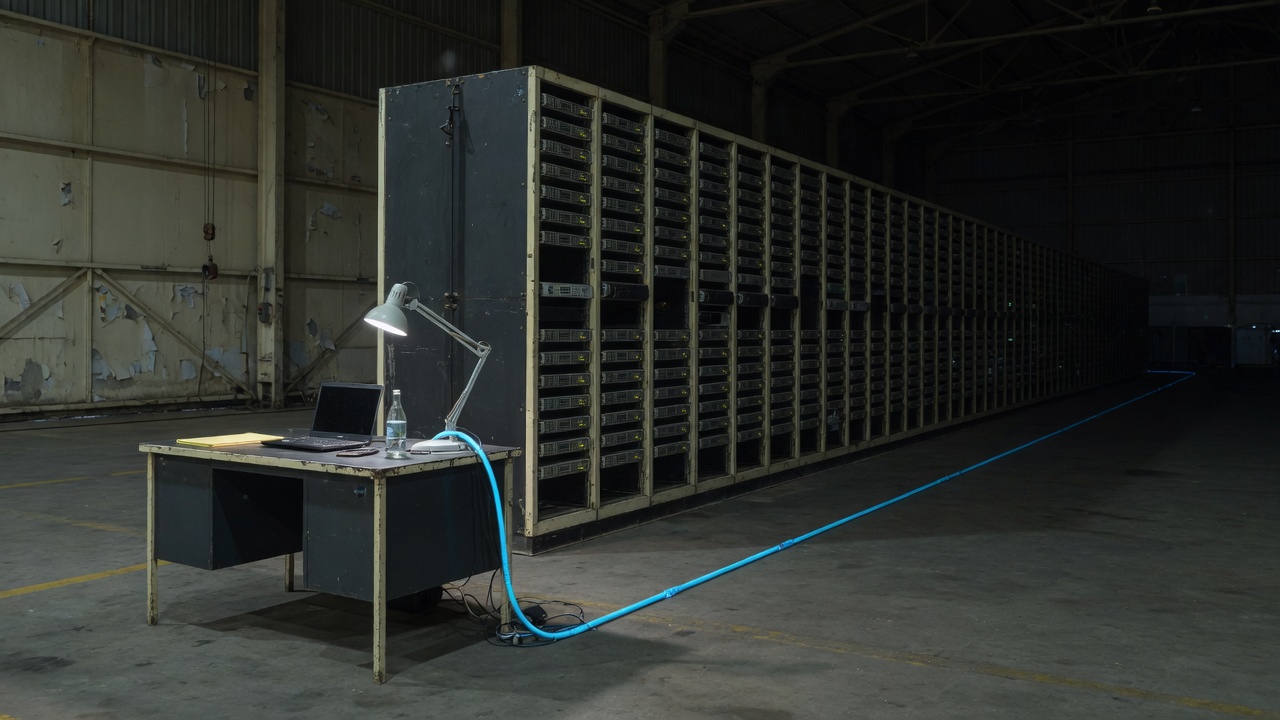
In 2008 a small video site called Animoto got famous in a week. They went from fewer than a hundred computers to 3,400.
No one drove to a warehouse. No one signed a two-year lease on a room full of machines. They turned a dial. The bill went up with the dial. When the rush ended, the dial came down.
That was impossible in 2005. It is why a shop, a paper, a side project, and Netflix now run on the same idea: pay for the computer while you use it.
That idea has a name. Pay as you go. Like electricity. You use it, you pay. You stop, the bill stops.
Ten US cents an hour
A new website used to start with a purchase order. Servers took weeks to arrive. You guessed how busy you would be, bought for that guess, and paid through the quiet months. Guess low, and the site died on the day it mattered. Guess high, and you owned a warm box for a year.
Cheap shared hosting was the same bet with a lower ceiling. You paid each month, then hit a wall. A whole server of your own was the bigger version. Three in the morning cost the same as a launch day.
In March 2006 Amazon opened a service called S3. It was storage you could have without a meeting. On 25 August 2006 they opened Elastic Compute Cloud, or EC2. You could rent a computer over the internet. Ten US cents an hour. That is about R1.70 an hour at about R16.65 to the dollar. A man named Jeff Barr posted the news from a holiday. People barely had a word for it yet.
The computers were still in a building. They had always been in a building. What changed was the ticket. You asked for a machine, you paid while it ran, you gave it back. Later they billed by the second. Google and Microsoft built the same kind of meter.
Airbnb, Slack, Instagram, and a thousand quieter companies rented a warehouse they did not have to buy. In 2014 Amazon added Lambda. Your code runs, you pay for those tiny slices of time, and nothing sits warm in the gap. People call this serverless. The servers are still there. You only pay when your code runs.
What that did for everyone
A site that gets twelve visits a day used to need a box that stayed on all week. Now twelve visits cost something like twelve visits. A radio mention, a link that takes off, a Saturday that gets busy — the platform takes the punch, then the bill sits down again.
The 3am disk crash moved. The people who own the building handle the broken drives, the security papers, and a lot of the attacks. You keep the name of the site, the words on it, and the button that says go live.
You still buy the name. You still point it at the right place. You still need a person who can fix a mistake without taking Friday with it. The box left the room. The work stayed.
The meter can hurt you. Forget a process. Store a mountain of video. Let a robot hit your site all night. Quiet-and-cheap becomes a shock. You are renting. Prices move. You pack, or you pay.
And the buildings got huge. The same meter that lets one person put a site up on a Monday is the meter inside the halls that have booked the world's RAM for years. A small website is a rounding error on that bill. Training an AI model is a factory's worth of chips. The RAM story on this blog is this story with the volume turned up.
A page that never changes can still live on a simple monthly host. Pay as you go is just a way to charge. It is also the way a person with a laptop can go live without ordering hardware first.
Why ZOAT exists
The dial made it possible. Someone still has to buy the name, point it, put the pages up, and keep the computers in the real room working — the ones on desks, the ones that die on a Thursday — while the site stays up.
Zach of All Trades is here for those machines. PCs, repairs, the network you can trip over. ZOAT Studio is here for the half the cupboard used to hold: a site on a meter, built so people can find it, and built so it stays up.